
From the Temple Mount to the Trust That Presumed the Living Man Dead
By Rev. L. Oliver Legend — Messages to the Masses Ministry
There is a layer to the events of this world that most modern people, schooled to think only in politics, economics, and military strategy, never learn to see. That layer is faith. For nearly the whole of human history, civilizations have been shaped — built, defended, broken, and remembered — by what their people believed about God. Sacred places, temples, and spiritual traditions have moved the rise and fall of empires more surely than armies have. A secular eye reads the headlines and finds only money and power. A scriptural eye reads underneath them and finds something older: a struggle over who, and what, men will worship.
This is a long article, and it covers a great deal of ground — fifteen centuries and more of documented, traceable history. But it is, at heart, a single story told in two movements. The first movement is sacred: a stone on a mountain in Jerusalem, a covenant, a temple, an exile, and a name — Babylon — that the Scripture lifts out of one literal empire and turns into the permanent symbol of every worldly system that tries to administer the people of God. The second movement is legal: how the Western world, long after Jerusalem, quietly built its own administrative "Babylon" — not in stone, but in paper — that learned, by a small and strangely-named statute passed in London in 1666, to convert a living man into a managed entity and to presume him dead.
I want to say plainly, before the first date, what kind of writing this is and is not. It is not a manifesto. It will not promise you a secret account, a magic filing, or a way to vanish from law and debt by writing the right words on the right form. That promise is a lie, and I will show you, with citations, exactly why — because the surest way to discredit a true and astonishing history is to staple a false theory to it. What I am after is the documented ground: the part a skeptic can click, verify, and not refute. Where I move from the documented ground onto interpretation or conviction, I will tell you I am doing it, the way I did in The Crown Above the Head. The honesty is the point. A free people deserves the truth told straight, with the seams showing.
One more thing at the outset, and it governs everything below. The adversary in this story is never a people. There is no bloodline, no nation, no ethnic cabal at the bottom of this. The adversary is the old human tendency of institutions, offices, and a centralizing system to administer the soul — to convert a living man into a manageable entity — and behind that, the spiritual deception that has whispered the same thing since the garden: you can be governed by something other than God. Keep that frame. It is both the more accurate reading of the record and the only one worthy of Christ.
PART ONE — The History Behind the Stories That Shape Our World
The layer secular analysis misses
Begin where the world began to be measured: not with a treaty or a coin, but with a place. One of the most fought-over pieces of ground on earth is a modest rocky plateau in the city of Jerusalem — and the reason it has drawn the attention of empires for three thousand years has almost nothing to do with its size or its resources, and almost everything to do with what three of the world's largest faiths believe happened there. To understand why this single location still commands global attention today, you have to be willing to do the thing modern analysis refuses to do: take faith seriously as a force in history.
The Foundation Stone on Mount Moriah

At the center of the story is a place called the Foundation Stone, on the height Scripture calls Mount Moriah, in Jerusalem. The same stone, the same hill, is sacred to three traditions at once — which is precisely why it is among the most sensitive sites on the planet.
- In Jewish tradition, the Foundation Stone is held to be the place where God began the creation of the world, and is identified with the mountain where Abraham was sent to offer his son Isaac. It is the site on which the Temple would later stand, with the Holy of Holies above it.
- In Christian tradition, Jerusalem is the city of the life, teaching, crucifixion, and resurrection of Jesus of Nazareth; the Temple that stood near this stone is central to the Gospels, and Jesus taught in its courts.
- In Islamic tradition, this is the site from which Muslims believe the Prophet Muhammad ascended during the Night Journey; two of Islam's holiest structures — the Dome of the Rock and the Al-Aqsa Mosque — stand on the plateau today.
One stone. Three of the largest faith traditions on earth. That convergence alone should tell a careful reader that the deepest drivers of history are not always visible to a purely material analysis.
Walking the sacred timeline
Here is the arc of that sacred history, told as a sequence — because the sequence itself is the lesson.
Abraham and Mount Moriah (approx. 2000 BC). According to the Book of Genesis, Abraham was instructed to bring his son Isaac to Mount Moriah as an offering to God — and was stopped, and given a ram in Isaac's place. Whatever a reader's own belief, this account became one of the foundational moments in the development of monotheistic faith: the binding of obedience and mercy onto a single hill. Jewish tradition later identified this same Mount Moriah as the place where the Temple would be built.
Solomon builds the First Temple (approx. 957 BC). King Solomon raised the First Temple in Jerusalem on that height, and it became the central place of worship for ancient Israel: the site of sacrifice, of the great national festivals, of the priesthood, and of the Ark of the Covenant. For the first time, the worship of the God of Abraham had a fixed and visible center — a house for the Name.
The Babylonian conquest, destruction, and exile (586 BC). Then came the catastrophe that will become the hinge of this entire article. The Babylonian Empire, under Nebuchadnezzar, conquered Jerusalem, destroyed Solomon's Temple, and carried much of the people of Judah away into exile in Babylon. The center was gone. The house for the Name was rubble. A people were marched away from the only place their worship had ever had a home. This is one of the most traumatic events in the whole of Jewish history — and, as we will see, it gave Scripture a word it would never let go of: Babylon.
The return and the Second Temple (516 BC – 70 AD). After the exile, a remnant returned and rebuilt. The new structure became known as the Second Temple. Centuries later, King Herod the Great expanded and renovated the complex on a colossal scale, making the Temple Mount one of the largest religious structures in the ancient world — the magnificent courts that Jesus would later walk.
Jesus in the Temple, foretelling its fall (approx. 30 AD). Jesus of Nazareth taught regularly in the Temple courts. In a moment recorded in the Gospels, looking on that vast and seemingly permanent structure, He foretold its destruction — that not one stone would be left upon another. To His listeners, for whom the Temple was the very center of national and religious life, the words were shocking.
The Roman destruction of Jerusalem (70 AD). Within a generation, the prophecy was history. Following a Jewish revolt, Roman forces under the general Titus besieged Jerusalem, captured the city, and destroyed the Second Temple — by the accounts, dismantled and burned. This ended the era of temple-centered Judaism; Jewish religious life shifted toward the synagogue and rabbinical teaching. The same Rome that destroyed the Temple is the Rome whose administrative and legal afterlife will occupy the second half of this article — which is why the two movements of this story are, in the end, one.
Julian's failed rebuild (363 AD). Three centuries later there was a strange coda. The Roman Emperor Julian — called "the Apostate" because he turned from Christianity back to the old gods — set out to rebuild the Jewish Temple, in part to undercut Christian claims that its fall was final. The historical records describe the attempt halted by disaster: earthquakes and fires breaking out at the foundations. The project was abandoned. Whatever one makes of the cause, the fact of the failed attempt is part of the record.
The rise of Islam and the structures on the site (7th century AD). In the 600s, Islam emerged in the Arabian Peninsula, and after Muslim forces took Jerusalem, two great structures rose on the former Temple site: the Dome of the Rock and the Al-Aqsa Mosque. They stand there still, among the holiest places in Islam — built over the very stone sacred to the other two traditions.
The site today. The Temple Mount remains one of the most sensitive religious locations on earth: the Dome of the Rock, the Al-Aqsa Mosque, and, nearby, the Western Wall — the last remnant of the Herodian Temple complex, and the holiest accessible site in Judaism. Jews, Christians, and Muslims all hold the place sacred. For millions, it is not a landmark. It is identity, belief, and spiritual inheritance.
Why this history matters
Walk back through that sequence and notice what it actually demonstrates. A single hill, and the faith attached to it, has shaped three thousand years of empire, exile, war, and return — outlasting Babylon, outlasting Rome, outlasting every government that ever tried to control it. The story of Jerusalem is the clearest possible proof of the thesis this article opened with: religious tradition, sacred geography, and the things people believe about God are not a footnote to history. They are often its deepest engine. A purely political or economic reading of the Middle East — or of the modern world — that leaves faith out is reading with one eye closed.
Documented ground vs. interpretation. Documented: the existence and successive destructions of the Temple on the Mount; the Babylonian conquest and exile of 586 BC; the Second Temple period; the Roman destruction under Titus in 70 AD; Julian's failed rebuild of 363 AD; the rise of Islam and the building of the Dome of the Rock and Al-Aqsa; the standing structures today. The precise dating of Abraham (approx. 2000 BC) and the theological meaning of these events differ across the three traditions and across scholars. Interpretation (our conviction): that faith is the underlying driver secular analysis keeps missing. We hold that as conviction, and we name it as such.
PART TWO — The Bridge: Babylon

Here is the seam where the two movements of this article join — and it is the single most important idea in the whole piece, so let me make it explicit and unmistakable.
When Babylon destroyed the Temple in 586 BC and marched Judah into exile, it did something to the imagination of Scripture that outlived the empire itself. Babylon stopped being merely a place and became a meaning. It became the Bible's permanent name for the worldly power that conquers, displaces, and administers the people of God — the proud city built by men to organize life apart from the Lord, the system that holds a people in a captivity they did not choose. The prophets used it that way. And by the end of the canon, in the Revelation, "Babylon" is no longer a city on the Euphrates at all; it is the archetype of every imperial-commercial system that sets itself against God — and the command to the faithful is stark: "Come out of her, my people" (Revelation 18:4).
That is not an antique phrase. It is the exact phrase a living minister uses today. Minister Edward-Jay-Robin Belanger — the Paraclete, as he is known — has taught for thirty years that the believer must "come out of Babylon," and by Babylon he means precisely this: the modern administrative-commercial system of "persons," registries, and debt that he holds men are pressed to serve in place of God. "Those people struggling around trying to figure out," he asks in one teaching, "well, how are we going to get out of Babylon?" His answer is scriptural, not commercial — but the word, and the diagnosis behind it, runs straight back through the prophets to the literal Babylon that razed the Temple.
So watch the pivot carefully, because this is the bridge that makes the whole article one story rather than two. From the fall of Jerusalem's Temple and the scattering of a people, the West would, many centuries later, build its own Babylon — and not in Jerusalem, and not even, in the end, in Rome where the machinery began, but everywhere at once, in paper. A quiet, administrative captivity. Not soldiers carrying a people across a desert, but offices and statutes and presumptions converting a living man — without his ever noticing the day it happened — into a managed legal entity. The literal Babylon took the Temple and the people. The administrative "Babylon" we will now trace took something subtler and, in its way, more total: it took the category of the living man and replaced it, on paper, with a person it could number, file, and presume dead.
Documented ground vs. interpretation. Documented: the literal Babylonian conquest and exile (586 BC); the use of "Babylon" as a symbolic name for a worldly anti-God system in the prophets and especially Revelation 17–18; the fact that Minister Edward-Jay-Robin frames his teaching around the command to "come out of Babylon." Interpretation (ours, and the Minister's): that the modern administrative-commercial order is rightly read as a "Babylon" in this scriptural sense. That is a conviction and a reading of Scripture — offered as such, not as a documented fact about institutions.
PART THREE — How a Living Man Came to Be Presumed Dead: The Documented Chain
We turn now from the sacred history to the legal one — but they are the same story. The Babylon that took the Temple is, conceptually, the same impulse that, in the Christian West, learned to take the living man and re-file him as an entity. Here is that chain, traced honestly, date by date, from the fall of Rome to the modern central bank. Watch how each link is real, and how none of them required a single secret conspiracy — only the patient continuity of institutions doing what institutions do.
I. Rome did not vanish in 476 — its machinery was inherited
The schoolbook says Rome "fell" in 476, when the commander Odoacer deposed the boy-emperor Romulus Augustulus and named no successor. That marker is real. But the sentence hides the most important fact in this half of the history: the political empire ended; the administration did not. And note the link backward — this is the same Rome whose general Titus destroyed the Temple in 70 AD. The empire that ended the sacred era in Jerusalem did not simply disappear; its legal mind was inherited.
Three things survived the fall and carried Rome's legal mind forward. First, the Eastern empire ran on from Constantinople for nearly another thousand years, until 1453 — there was a Roman emperor and Roman law in continuous operation long after the West collapsed. Second, Roman law was written down precisely as the West fell: between 529 and 534 the emperor Justinian I codified it as the Corpus Juris Civilis — the container in which Rome's ideas about persons, things, and obligations were preserved, to be rediscovered later. Third, and decisively, the bishops inherited the civil machinery. As imperial government dissolved in the West, the Church's officers absorbed the daily work of governing. Pope Gregory the Great (590–604) effectively ran the civil administration of Rome itself. The Church kept literacy, records, and Roman administrative forms alive in its chanceries and monasteries.
This is the hinge of the legal story. Rome's political form ended in 476. Rome's administrative and legal form was caught mid-fall by two hands — Justinian's codifiers, who wrote it down, and the bishops, who kept running it.
Documented ground vs. interpretation. Documented: the Western Empire ended politically in 476; the East lasted to 1453; Justinian codified Roman law in 529–534; the Church absorbed Roman administrative functions. Interpretation to resist: "Rome never fell — it simply became the Vatican, in one unbroken corporate succession." That overstates it. What the record supports is continuity by absorption and succession, not a single secret corporate Rome still in charge. State it as continuity, not identity.
II. Papal temporal power — one genuine grant, one famous forgery
A Church that administers is one thing; a Church that rules land as a sovereign is another. The papacy crossed that line in the eighth century, and the crossing involved one real grant and one of history's most consequential forgeries.
The real one is the Donation of Pepin (756). Pepin the Short, king of the Franks, defeated the Lombards and transferred territories in central Italy to the pope — founding the Papal States, which the pope ruled as a temporal monarch from 756 until 1870, and which survive today as Vatican City under the Lateran Treaty of 1929. This is genuine. Papal temporal power is real and traceable.
The forged one is the Donation of Constantine (composed sometime in the eighth century). It purported to record that Emperor Constantine had handed Rome and the Western Empire to the pope. For roughly six hundred years it was treated as authentic and cited to justify papal claims — until 1440, when the humanist Lorenzo Valla proved by linguistic analysis that the Latin could not date from Constantine's century. It was a fake. The honest lesson is double: the forgery was real as a forgery — it genuinely shaped European politics for centuries — but it was never real as history. Both halves are true, and we keep both.
III. Canon law — the bridge from Rome to the West, and the birth of the artificial "person"

If Roman law was the inheritance and the Church the heir, canon law was the vehicle that carried the estate forward. From Gratian's Decretum (c. 1140) — which harmonized centuries of scattered Church rulings into a systematic legal science — canon law became one of the most sophisticated bodies of law in the world, taught in the new universities alongside the revived Roman civil law. These compilations together became the Corpus Juris Canonici, the chief source of Church legislation until 1917.
Two of canon law's inventions matter directly to our chain.
First, the juridic person. The Church's law distinguishes the physical person (a living human being) from the juridic person — an artificial entity that is not a human being but that the law treats as a subject of rights and duties. This is the conceptual ancestor of the modern corporation, of the trust, and — note carefully — of the idea that a legal "person" can be something other than a living man. When Minister Edward-Jay-Robin says the word person names "a legal fiction on the page," he is pointing at something with a real and traceable history. The concept of an artificial person is documented. It was systematized in canon law. That much is solid ground.
Second, the law of temporal goods — the machinery by which an institution, rather than a mortal individual, could acquire, hold, administer, and pass on property. Centuries of that practice fed directly into Europe's law of property and trusts.
Documented ground vs. interpretation. Documented: canon law created and systematized the juridic/artificial person and a mature law of institutional property, and these concepts genuinely shaped Western civil law. Interpretation to resist: "canon law secretly governs you today." It does not. Canon law binds the Catholic Church's own affairs. The link to us is conceptual descent — the idea of the artificial person flowing downstream into our law — not present jurisdiction over non-Catholics.
IV. Authority by declaration — the papal bulls and the Doctrine of Discovery

This layer runs alongside the trust line, not through it — but it belongs in the same history, because it shares one deep assumption: that title to land and dominion over persons can be spoken into being from on high. Different machinery, same family of idea: jurisdiction by declaration.
The escalation runs through four documents. Unam Sanctam (1302), Boniface VIII's "two swords" bull, declared "it is absolutely necessary for salvation that every human creature be subject to the Roman Pontiff" — the high-water mark of papal claims over persons. Dum Diversas (1452) authorized the king of Portugal to "subdue" non-Christians and "reduce their persons to perpetual slavery." Romanus Pontifex (1455) extended that into a trade-and-conquest monopoly in West Africa. Inter Caetera (1493), issued the year after Columbus, drew a line across the globe and granted Spain the lands west of it. Together these became the Doctrine of Discovery.
That doctrine did not stay in the fifteenth century. In Johnson v. M'Intosh (1823), Chief Justice John Marshall imported "discovery gave title" into U.S. law, reducing Native nations to a "right of occupancy" — a case still taught in first-year American law school. The loop finally closed in 2023, when the Vatican formally repudiated the Doctrine of Discovery, stating the bulls "did not adequately reflect the equal dignity and rights of Indigenous peoples" and were "never considered expressions of the Catholic faith."
Documented ground vs. interpretation. Documented: the bulls, the doctrine, Johnson v. M'Intosh, the 2023 repudiation. Interpretation to resist: "the Cestui Que Vie Act is part of the Doctrine of Discovery — it's how they claimed you." No. These are two distinct legal traditions that share an ancestor-idea (authority declaring legal reality). The bulls concern title to newly-encountered lands and peoples; cestui que vie concerns presumed death in English property law. Do not merge them into one mechanism.
V. England joins the system, then pulls away
England matters because England is where the 1666 Act was eventually passed — and England's relationship with papal Rome ran a full arc of submission and separation.
Submission (1213). Cornered by interdict and the threat of French invasion, King John surrendered England and Ireland to Pope Innocent III and held them thereafter as a papal fief, agreeing to an annual tribute of 1,000 marks (700 for England, 300 for Ireland). For a time, the King of England held his crown, in legal theory, from the pope. This is real, documented history.
Separation (1366, then 1534). The arrangement did not hold. When the tribute was demanded, the English Parliament in 1366 declared John's grant null and void — made without Parliament's consent and contrary to his coronation oath. That principle — that the king cannot bind the realm without Parliament — is itself a seed of free government. The decisive break came under Henry VIII: the Act of Supremacy (1534) severed England from Rome and placed the Crown where the pope had stood. The administrative-spiritual machinery did not vanish; it was transferred to the Crown. The hand on the lever changed; the lever remained.
Documented ground vs. interpretation. Documented: John's 1213 surrender and tribute; Parliament's 1366 repudiation; the 1534 Act of Supremacy. Interpretation to resist: "England is still secretly a papal fief, so you still belong to Rome." It was repudiated twice over. State the full arc — submission and decisive separation.
VI. The English machinery before 1666 — uses, trusts, wills, and the cestui que vie
To read the 1666 Act, you must first learn the vocabulary it was written in. Almost every popular misreading comes from not knowing these words. Learn them, and the Act becomes ordinary.
Medieval English law was rigid about land — you could not, for centuries, easily leave it by will or split ownership from benefit. Lawyers invented the "use" to get around that rigidity: land was granted to one person to the use of another. The holder of legal title was the proto-trustee; the beneficiary was the cestui que use — "he for whose use" the land was held. That split — legal title in one hand, benefit in another — is the foundation of everything that follows, including the modern trust.
Henry VIII struck at the use (it dodged feudal dues) with the Statute of Uses (1535–36), which "executed the use" by collapsing the split in many cases. Lawyers soon found that active trusts — where the trustee had real duties — escaped the statute, and from that escape the modern trust was born. The Statute of Wills (1540) then restored the power to devise land by will.
Now the four terms you need:
| Term | Plain meaning |
|---|---|
| Cestui que use | "He for whose use" land is held — the beneficiary under a use (proto-trust). |
| Cestui que trust | The beneficiary of a trust — entitled to the benefit while a trustee holds legal title. |
| Cestui que vie | "He for whose life" land is held — the living person whose lifespan measures how long an estate lasts. |
| Estate pur autre vie | An estate held "for the life of another" — you hold the land for as long as some named person lives. |
And two roles: the reversioner is the one entitled to get the land back when a limited estate ends; the tenant pur autre vie is whoever currently holds it for the duration of the measuring life.
Now the problem the 1666 Act solves is obvious. Suppose land is held for the life of John, who has sailed "beyond the seas." Is John alive? If so, the tenant keeps the land. If dead, it reverts. But how do you prove a death you cannot witness, of a man across the ocean? That uncertainty — not an occult plot — is the entire reason the Act exists.
Documented ground vs. interpretation. Documented: the use, the Statute of Uses, the Statute of Wills, and the plain meaning of cestui que vie as the measuring life of an estate. Interpretation to resist: "cestui que vie means you — your dead strawman, made from your birth certificate." No. It is a 600-year-old conveyancing term for a living human being whose lifespan sets how long someone else may hold land. It has nothing to do with birth certificates, which did not exist in this sense in 1666.
VII. The Cestui Que Vie Act 1666 itself
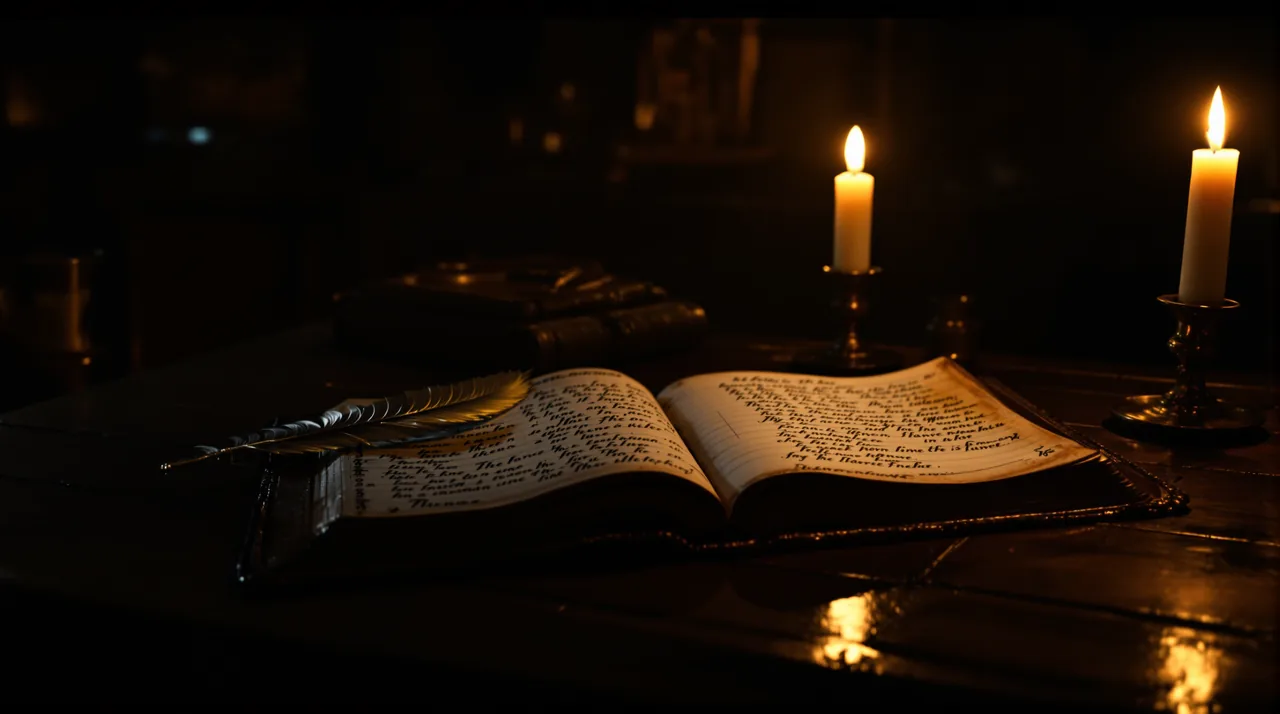
Here is the centerpiece, read on its own terms. England in 1665–66 had endured the Great Plague — London lost roughly fifteen percent of its population — and the Great Fire of September 1666, and many men had gone "beyond the seas" in the Anglo-Dutch wars. People vanished, and their deaths could not be proven.
The Act's full long title announces its own purpose:
"An Act for Redresse of Inconveniencies by want of Proofe of the Deceases of Persons beyond the Seas or absenting themselves, upon whose Lives Estates doe depend."
Read it slowly. It is a practical evidence-and-property statute — solving exactly the problem from the section above. The operative rule: if the measuring life (the cestui que vie) is absent beyond the seas for seven years and no proof of life is produced, the court treats that person "as naturally dead," so the land can pass to whoever is next entitled. This is a presumption-of-death rule for property litigation. It does not declare that anyone is dead. It is a default the court applies when a real death cannot be proven and the land cannot stay frozen forever.
And here is the part the myth always omits: the Act contains a return remedy. If the "dead" person comes back, or is proven to have been alive, the law puts things right — the tenant who was "outed" may re-enter, repossess, and even recover the lost profits with interest. A statute that permanently declared people dead and stripped them of everything would not contain a clause for them to come home and reclaim their land. The 1666 Act is the opposite of a death-trap: a temporary, rebuttable default that keeps property from being stuck in limbo while a missing person is unaccounted for.
It remains partly on the statute book today. The UK's official legislation database states plainly: "There are currently no known outstanding effects for the Cestui Que Vie Act 1666." It was never a secret instrument of mass death-declaration. It was, and is, a narrow property rule.
VIII. The 1707 Act — closing the "pretended to be alive" loophole
The 1666 Act handled the man who might be dead. The Cestui Que Vie Act 1707 handled the mirror-image fraud — a man who is really dead but is fraudulently kept "alive" on paper so someone can keep collecting the benefit. Its long title targets "Persons pretended to be alive to the Prejudice of those who claim Estates after their Deaths." It gave the reversioner a remedy: produce the person, or treat them as dead. Together the two Acts are a matched, anti-fraud pair — 1666 asks "is he dead?"; 1707 says "you're hiding that he's dead." Both are about estates, life tenants, reversioners, and proof of death. Neither is about secret trusts over living citizens. This internal logic is itself strong proof of what the doctrine was always about.
IX. The living descendant — modern presumption-of-death law
The 1666 Act never went away by magic; it was simply replaced by something cleaner, exactly as you would expect of an ordinary property statute that outlived its drafting. For England and Wales, that successor is the Presumption of Death Act 2013: any person may apply to the High Court for a declaration that a missing person — gone or unheard-of for at least seven years — is presumed dead, unfreezing estates, property, and marriage. Same problem, modern procedure. The line from 1666 to 2013 is real — and it is a line of humane legal housekeeping, not conspiracy. Missing people create genuine problems for the families left behind, and the law needs a way to resolve them.
X. The same era's other invention — public credit and central banking
Something genuinely important did happen in the decades right after 1666 — though not what the myth claims. The same century that perfected the legal technology of presumption and administration over property also birthed the financial technology of public credit and the national debt. Sveriges Riksbank (1668) — the world's oldest central bank — was founded by the Swedish parliament. The Bank of England (1694) was founded to lend to the government, institutionalizing public credit and the permanent national debt. The line runs on: Federal Reserve Act (1913), Bank for International Settlements (1930), Bretton Woods (1944) and its IMF and World Bank, and the end of dollar-gold convertibility (1971) that ushered in the modern fiat system.
There is a real and striking pattern here: the same maturing administrative age that learned to govern persons and estates through paper and presumption also learned to govern money through paper and standing debt. That is a teachable continuity — and it is, in fact, the modern face of the "Babylon" of Part Two: an imperial-commercial order administered in paper. But here is the single most important place in this article not to overclaim:
Documented ground vs. interpretation. Documented: every one of those institutions and dates. Interpretation to resist — firmly: "the 1666 Act made everyone 'dead' so the banks could pledge their estates as collateral for the national debt." There is no documentary evidence of a causal link. The Bank of England was not founded because of the Cestui Que Vie Act. Say it honestly: same administrative era, parallel developments, no proven causal chain. Conceptual kinship is not causation. To claim otherwise is to trade the gold of real history for the lead of a theory you cannot defend.
A word to those who have heard Minister Edward-Jay-Robin
Many who reach this article will first have heard a version of it from Minister Edward-Jay-Robin Belanger (@Owlmon) — the Paraclete, as he is known — teaching for thirty years that you must "come out of Babylon," that you are "not a person," and that the word person in Scripture is something God Himself refuses to respect. "Quote me on this," he says, "you will never ever escape a false-Jew fraud without Christ and your faith pointing to the scripture that you're not a person." He grounds it in the same verses again and again: God is no respecter of persons (Deuteronomy 1:17, 10:17; 2 Samuel 14:14; Matthew 22:16; Acts 10:34; Romans 2:11), and if you respect persons, you commit sin (James 2:9). He reads person as a mask — "a dead thing," he says, the all-capital-letters name "you see on tombstones and obituary columns" — and calls men back to who they are: a created being, nephesh, a living soul, made in Genesis 1:26 with life and dominion, and named in Exodus 19:5–6 as God's own property.
This article exists, in part, to confirm and contextualize the documented spine of that teaching — and to do so without contradicting him on the one point where most of his imitators go wrong. Because here is what the Minister gets exactly right, and what this article holds to just as firmly:
He rejects the UCC / redemption path outright. In his own words, warning his listeners away from Cal Washington's promotion of it: "You can't use a uniform commercial code to get out of commerce." He compares chasing UCC "redemption" to "creative copulation with a dead prostitute" hoping to "gain virginity" — useless, and worse than useless. He names Winston Shrout, jailed for that very thing. The Minister's path is not commercial magic words. It is scriptural: a private, Christ-modeled agreement (Matthew 5:25; Matthew 18:15–20), the watchman's duty to warn (Ezekiel 33), and the refusal to consent to a presumption that violates one's faith.
So when you reach the myth-and-fact section of this article and find me dismantling the secret-trust, strawman, and UCC-redemption theories, understand: I am standing with the Minister, not against him. He, too, calls that road a dead end. What I add here is the documented historical floor beneath his teaching — the real statutes, the real dates, the real chain — so that no skeptic can wave the whole thing away by pointing at the pseudolaw that got attached to it. The history is real. The counterfeit is not. We keep the gold.
Documented ground vs. interpretation. A point of careful discipline: the Minister also teaches a "false Jews" reading (drawn from his interpretation of Revelation 2:9 / 3:9) and attaches it to the financial history. That reading is his stated theological position — we log it as his position, and we do not assert it as established fact. This article's adversary is never a people, a nation, or a bloodline. It is offices, a centralizing system, and spiritual deception. On that, the discipline does not bend.
The master timeline
A backbone for the whole story — from Abraham's mountain to the Vatican's 2023 repudiation. Eras above the line are sacred history; below it, the documented legal-administrative chain.
| Era / Year | Event | What it did | Source |
|---|---|---|---|
| ~2000 BC | Abraham brought to Mount Moriah | A covenant of obedience and mercy bound to a single hill; the seed of monotheism | Genesis 22 (sacred tradition) |
| ~957 BC | Solomon builds the First Temple | Gives the worship of the God of Abraham a fixed center on Mount Moriah | 1 Kings 6 (sacred tradition) |
| 586 BC | Babylon destroys the Temple; Judah taken into exile | The Temple razed and a people carried into captivity; "Babylon" becomes Scripture's name for the worldly system | 2 Kings 25; Jeremiah; standard chronology |
| 516 BC – 70 AD | Second Temple period (Herod's expansion) | The Temple rebuilt and enlarged into one of the ancient world's great structures | Ezra; Josephus; standard chronology |
| ~30 AD | Jesus teaches in the Temple and foretells its fall | Predicts not one stone left upon another — fulfilled within a generation | Gospels (Matthew 24; Mark 13) |
| 70 AD | Roman destruction of Jerusalem (Titus) | The Second Temple destroyed; temple-centered Judaism ends; the same Rome whose law endures below | Josephus; Britannica |
| 363 AD | Julian's failed attempt to rebuild the Temple | Halted by earthquakes and fires at the foundations; project abandoned | Ammianus Marcellinus; Britannica |
| 7th c. AD | Rise of Islam; Dome of the Rock & Al-Aqsa built on the site | The Temple Mount becomes sacred to a third tradition | Standard history |
| — — — the sacred era closes; the administrative one begins — — — | |||
| 476 | Fall of the Western Roman Empire | Political Rome ends in the West; the administration survives | Britannica, Romulus Augustulus |
| 529–534 | Justinian codifies Roman law (Corpus Juris Civilis) | Roman law — persons, things, obligations — written down and preserved | Wikipedia, Corpus Juris Civilis |
| 590–604 | Pontificate of Gregory the Great | The bishop of Rome runs civil administration; the Church fills the vacuum | Britannica, St. Gregory the Great |
| 756 | Donation of Pepin | Founds the Papal States — genuine papal temporal power | Britannica, Donation of Pippin |
| 8th c. (forged) | Donation of Constantine | A forgery later used to justify papal claims; exposed by Valla in 1440 | Britannica, Donation of Constantine |
| c. 1140 | Gratian's Decretum | Canon law becomes a systematic legal science; juridic persons, temporal goods | Britannica, Gratian's Decretum |
| 1213 | King John surrenders England to Innocent III | England becomes a papal fief; 1,000-marks annual tribute | Britannica/Wikipedia, John, King of England |
| 1302 | Unam Sanctam (Boniface VIII) | "Two swords"; every human creature declared subject to the Roman Pontiff | papalencyclicals.net |
| 1366 | English Parliament voids John's tribute | The papal-fief claim repudiated as made without Parliament's consent | Britannica/Wikipedia, John, King of England |
| 1440 | Valla exposes the Donation of Constantine | A foundational forgery unmasked — after centuries of influence | Britannica, Donation of Constantine |
| 1452 / 1455 / 1493 | Dum Diversas / Romanus Pontifex / Inter Caetera | Papal bulls underpinning the "Doctrine of Discovery" — title by declaration | papalencyclicals.net; doctrineofdiscovery.org |
| 1453 | Fall of Constantinople | The Eastern Roman Empire ends, ~1,000 years after the West | Britannica, Fall of Constantinople (1453) |
| 1534 | Act of Supremacy | Henry VIII breaks with Rome; the Crown takes the Church's place in England | Britannica, Act of Supremacy |
| 1535 / 1536 | Statute of Uses | "Executes the use"; reshapes how land is held in trust | Britannica, Statute of Uses |
| 1540 | Statute of Wills | Land can be devised by will for the first time post-Conquest | Wikipedia, Statute of Wills |
| 1666 | Cestui Que Vie Act | A presumption-of-death property rule: 7 years beyond the seas → "accounted as naturally dead," with a return remedy | legislation.gov.uk, 1666 c. 11 |
| 1668 | Sveriges Riksbank founded | World's oldest central bank — the administrative-finance era begins | riksbank.se |
| 1694 | Bank of England founded | Public credit institutionalized; the national debt funds war | bankofengland.co.uk |
| 1707 | Cestui Que Vie Act | Targets persons "pretended to be alive" — produce the body or treat as dead | legislation.gov.uk, 1707 c. 72 |
| 1823 | Johnson v. M'Intosh | U.S. Supreme Court imports "discovery gave title" into American law | Justia, 21 U.S. 543 |
| 1913 / 1930 / 1944 | Federal Reserve / BIS / Bretton Woods | The modern architecture of administrative-state finance | federalreservehistory.org; bis.org; World Bank |
| 1971 | End of dollar-gold convertibility (Nixon) | The modern fiat, floating-rate monetary system begins | federalreservehistory.org |
| 2013 | Presumption of Death Act (UK) | The modern statute that supersedes 1666 for England & Wales | legislation.gov.uk, 2013 c. 13 |
| 2023 | Vatican repudiates the Doctrine of Discovery; GOV.UK debunks the "cestui que vie trust" myth | An old institution and a modern government close two loops in this story | press.vatican.va; GOV.UK / HMCTS |
PART FOUR — The Reckoning: Why the "secret trust / strawman / legally dead" theory fails
I owe you the hard part stated as plainly as the rest. The credibility of everything above — the Temple Mount, the Babylon bridge, the documented chain — depends on not flattering a comfortable myth. The gold is real. The counterfeit must be named and set down.
The theory, in its common form, runs like this: The Cestui Que Vie Act 1666 secretly declared every living person "dead" or "lost at sea." When you were born, the state created a separate legal "person" — a "strawman," spelled in capital letters on your birth certificate — and set up a secret government trust account, often said to be worth millions, funded by your "value" as collateral for the national debt. Learn the right paperwork — UCC filings, "accepted for value," redemption — and you can reclaim the strawman, access the account, and discharge your debts.
Every load-bearing part of that is false. Here is the evidence, not opinion.
The Act doesn't say it. Its text concerns life-estate land tenure — absent persons, measuring lives, reversioners, proof of death. As one legal-history writer put it bluntly, this reading "is balderdash; while it is a presumption-of-death statute, it's nowhere near as sweeping as conspiracy theorists imagine."
The "passed in secret during the Fire" timing is wrong. Parliament was prorogued in April 1666 and did not reconvene until September 18 — after the Fire (September 2–5). The Act received Royal Assent in February 1667 (still dated "1666" under the old reckoning), more than five months after the Fire. There was nothing secret, and the seven-year presumption of death was not even new.
Birth certificates create no trust. A U.S. Bankruptcy Court held flatly in 2024: "a birth certificate cannot be collected and reduced to money." The U.S. Treasury's own site (TreasuryDirect) states that birth certificates "cannot be used for purchases," that bonds purportedly held by the government do not exist, and that the "Exemption Account" is "a false term; these accounts are fictitious and do not exist in the Treasury system." The United Kingdom said the same of its own version: HM Courts & Tribunals Service published a notice on GOV.UK in 2023 stating in unambiguous words, "A cestui que vie trust does not exist and there's no such trust held by the government." It even diagnosed the confusion — the myth fuses two real, narrow conveyancing terms (cestui que trust and cestui que vie) into one imaginary account.
There is no separate "strawman." Canada's Meads v. Meads (2012) catalogued and demolished this whole family of theories — which the court named "Organized Pseudolegal Commercial Arguments" — across nearly 200 pages, holding that "'Double/split person' schemes have no legal effect… There is only one legal identity that attaches to a person." U.S. courts agree: "regardless of an individual's claimed status… that person is not beyond the jurisdiction of the courts. These theories should be rejected summarily, however they are presented." The IRS lists the "straw man" argument as a frivolous position (Notice 2008-14). The FBI classifies "redemption" and "birth-certificate bond" schemes as fraud.
And the UCC path is a dead end — which is where I stand exactly with Minister Edward-Jay-Robin. You cannot use the Uniform Commercial Code to get out of commerce. The Minister names it plainly: chasing UCC redemption is "creative copulation with a dead prostitute" hoping for virginity, and he points to Winston Shrout — imprisoned for promoting that very thing — as the proof. Filing bogus UCC liens against officials ("paper terrorism"), refusing tax on strawman grounds, passing fictitious instruments — these do not free anyone. They produce fines, convictions, and prison. The Minister warns away from it for the same reason I do.
So we set the pseudolaw aside — honestly, and specifically:
- There is no secret trust account in your name. (GOV.UK / HMCTS, 2023; U.S. TreasuryDirect.)
- There is no separate "strawman" person. (Meads v. Meads, 2012.)
- The 1666 Act did not declare anyone "dead" as a status; it created a rebuttable presumption for missing persons, with a return remedy.
- You cannot discharge debts or escape law by "reclaiming" a strawman or filing UCC/redemption paperwork. Courts uniformly reject it.
And setting the myth aside does not erase the real history. Everything in Parts One through Three remains true and sourced. The Temple Mount and its successive destructions; the Babylonian exile; Rome's administrative survival; canon law's juridic person; the papal bulls; King John's surrender; the trust; the 1666 Act as a real and still-extant statute; the rise of central banking — all genuine. The deep, strange, well-documented continuity of how Western institutions came to govern personhood, property, and debt through paper and presumption is the prize. The strawman myth is a counterfeit that, if embraced, lets a critic discredit the genuine article with a single click. We keep the gold and discard the counterfeit.
Claim-vs-evidence — how to state each thing responsibly
| Claim | Evidence level | How to state it |
|---|---|---|
| The Temple on Mount Moriah was destroyed by Babylon (586 BC) and Rome (70 AD). | Strong | State directly; standard chronology and Josephus. |
| Faith and sacred geography are the deepest driver of these events. | Conviction (ours) | State openly as conviction, not as documented fact. |
| "Babylon" became Scripture's symbol for the worldly anti-God system. | Strong (textual) | State directly from the prophets and Revelation 17–18. |
| The modern administrative-commercial order is that "Babylon." | Interpretation (ours and the Minister's) | Offer as a scriptural reading, named as such. |
| The 1666 Act concerned absent persons and estates depending on lives. | Strong (primary text) | State directly; quote the long title and the return clause. |
| The 1707 Act concerned persons "pretended to be alive." | Strong (primary text) | State directly as the complement to 1666. |
| Canon law created juridic persons, temporal goods, and institutional property. | Strong | State as the conceptual ancestor of corporations/trusts — not present jurisdiction over you. |
| Papal bulls fed later discovery/title doctrines. | Strong/moderate | State as historical-legal influence; keep separate from cestui que vie. |
| England was a papal fief, then repudiated it. | Strong | State the full arc: submission (1213) and repudiation (1366, 1534). |
| "Rome simply became the Vatican." | Too simplistic | Rephrase as continuity through papacy, canon law, and temporal claims. |
| The Vatican premeditated the 1666 Act. | Not proven | Do not assert. Treat as continuity of ideas, never a single secret plan. |
| Central banking emerged soon after 1666. | Strong | Riksbank 1668, Bank of England 1694 are well-sourced. |
| The 1666 Act caused central banking. | Not proven | Same era, parallel developments — no proven causal chain. |
| The Act secretly declared people legally dead. | False / debunked | Reject explicitly; cite the Act's text + GOV.UK. |
| A "strawman" is created from your birth certificate. | False / debunked | Reject explicitly; cite Meads v. Meads (2012). |
| A secret government trust account exists in your name. | False / debunked | Reject explicitly; cite GOV.UK / HMCTS and U.S. TreasuryDirect. |
| You can escape law/tax/debt via UCC/redemption paperwork. | False / debunked | Reject explicitly; the Minister rejects it too. |
| The financial system is run by "false Jews." | The Minister's stated position only | Log as his theological reading (Rev. 2:9/3:9); do not assert as fact; our adversary is never a people. |
A short glossary
- Foundation Stone / Mount Moriah — the rock and hill in Jerusalem held sacred by three faiths; the traditional site of Abraham's offering and of the First and Second Temples.
- Babylon — literally, the empire that destroyed the Temple and exiled Judah in 586 BC; in Scripture (especially Revelation 17–18), the symbol of the worldly imperial-commercial system set against God, the one the faithful are told to "come out of."
- Juridic (artificial) person — a legal entity that is not a living human being but is treated by law as a subject of rights and duties; systematized in canon law, ancestor of the corporation and the trust.
- Use — the medieval English arrangement (land held by one to the use of another) that split legal title from benefit; the proto-trust.
- Cestui que use / trust / vie — respectively, the beneficiary of a use; the beneficiary of a trust; and "he for whose life" an estate is measured (the living person whose lifespan sets the estate's duration).
- Estate pur autre vie — an estate held "for the life of another" named person.
- Reversioner — the party entitled to the land back when a limited estate ends.
- Presumption of death — a court's rebuttable default that a long-absent person is treated as dead for specified legal purposes (1666 → 2013 Act).
- Strawman / redemption / "accepted for value" — pseudolaw terms for the false theory of a capital-letters "person" with a secret Treasury account; rejected by courts and governments.
Why a free, Christ-centered people should care

Now let me tell you why this whole history — sacred and legal at once — matters to us, and here I am openly on the ground of conviction.
We hold that a man or woman is a free living being made by God — nephesh, a living soul, breathed into in Genesis, crowned with life and dominion before any clerk ever opened a file. The deepest current in the American founding draws from that same well: the conviction, drawn from Scripture and the teachings of Christ, that rights are endowed by a Creator, not granted by an office. When the framers wrote that men are "created equal" and "endowed by their Creator," they were not inventing a theory of the state. They were confessing a theology of the person. A government built on that confession is one that knows it did not make you, and therefore cannot un-make you into a category.
So what does this long arc — from a stone on Mount Moriah, through Babylon's captivity, to a statute that "accounts a living man naturally dead" — teach a free people? Not paranoia, and certainly not magic words. It teaches discernment — the very thing this ministry exists to build. The genius of every "Babylon," ancient or administrative, is that it governs not always by chains but by presumption: it quietly assumes a thing about you, files it, and waits to see whether you will live as though the assumption were true. The Cestui Que Vie Act is a near-perfect parable of exactly that — a court declaring a living man "accounted as naturally dead," not because he died, but because no one proved otherwise. The whole machinery turns on what goes unchallenged.
This is precisely where Minister Edward-Jay-Robin's call lands with force. "Come out of Babylon" is not, in his mouth, a UCC filing or a sovereign-citizen stunt — he rejects all of that. It is a spiritual awakening: a refusal to consent in your soul to a presumption that would have you respect a mask over a man, and a return, through Christ, to who you actually are. Choose life, that thou mayest live (Deuteronomy 30:19). The watchman's duty (Ezekiel 33) is simply to warn — to tell people the house has a presumption in it they never agreed to, and that there is a door.
That awakening has consequences we are building toward, not just talking about: free, off-grid, Christ-centered community — people learning to live as living souls before God rather than as managed entities before a system; raising children who know whose image they bear before the world tells them whose category they fill; holding land and labor and worship in a way that answers first to the golden rule, love your neighbor as yourself, which the Minister rightly names as the only law a free man is finally under.
But hear the discipline one last time, because it is the heart of the whole piece. The enemy is never a people. It is never a nation or a bloodline. It is the ancient pull of institutions to administer the soul — the same pull that built the first Babylon by the Euphrates and the paper Babylon of our own age — and the spiritual deception behind it that always offers a lord other than Christ. You do not fight that with paperwork. You do not escape it with incantations. You come out of it the way the Minister teaches and the way the Scripture commands — by faith, in Christ, in plain honesty, refusing the lie and keeping the truth, with the seams showing.
The history is real. The counterfeit is not. And a free people, made by God and awake in Christ, can hold both of those truths at once — which is, in the end, the only freedom worth the name.
Messages to the Masses Ministry — teaching the history behind the stories that shape our world. This article presents documented historical and legal facts with citations, distinguishes those facts from interpretation and conviction, and rejects the "secret trust / strawman / UCC-redemption" pseudolaw that courts and governments have uniformly disproven. It is not legal advice.
Sources
Sacred history & the Temple Mount: Genesis 22; 1 Kings 6; 2 Kings 25; Ezra; Jeremiah; the Gospels (Matthew 24, Mark 13) · Josephus, The Jewish War (destruction of 70 AD) · Ammianus Marcellinus and Britannica (Julian's failed rebuild, 363 AD) · standard chronologies of the First Temple (~957 BC), the Babylonian exile (586 BC), the Second Temple period (516 BC–70 AD), and the rise of Islam / Dome of the Rock & Al-Aqsa (7th c.) · Revelation 17–18 ("Babylon"; "come out of her, my people")
Rome & late antiquity: Britannica, Romulus Augustulus · Britannica, Fall of Constantinople (1453) · Wikipedia, Corpus Juris Civilis · Britannica, St. Gregory the Great
Papal power & canon law: Britannica, Donation of Pippin · Britannica, Donation of Constantine (forgery; Valla 1440) · Britannica, Gratian's Decretum · Wikipedia, Corpus Juris Canonici · Vatican, Code of Canon Law (juridic persons, cann. 96–123; temporal goods, can. 1254 ff.)
Bulls & Doctrine of Discovery: Unam Sanctam (papalencyclicals.net) · Dum Diversas (doctrineofdiscovery.org) · Romanus Pontifex (papalencyclicals.net) · Inter Caetera (papalencyclicals.net) · Johnson v. M'Intosh, 21 U.S. 543 (Justia) · Vatican Joint Statement repudiating the Doctrine of Discovery, 30 March 2023 (press.vatican.va)
England, equity & the Cestui Que Vie Acts: Britannica/Wikipedia, John, King of England (1213 surrender; 1366 repudiation) · Britannica, Act of Supremacy (1534) · Wikipedia, Cestui que (the use) · Britannica, Statute of Uses (1535/36) · Wikipedia, Statute of Wills (1540) · Merriam-Webster, cestui que vie · Cestui Que Vie Act 1666 (legislation.gov.uk, 1666 c. 11) · Cestui Que Vie Act 1707 (legislation.gov.uk, 1707 c. 72) · Presumption of Death Act 2013 (legislation.gov.uk, 2013 c. 13)
Banking & public credit: Sveriges Riksbank, 1668 (riksbank.se) · Bank of England, 1694 (bankofengland.co.uk) · Federal Reserve Act, 1913 (federalreservehistory.org) · Bank for International Settlements, 1930 (bis.org) · Bretton Woods, 1944 (World Bank / Britannica) · End of gold convertibility, 1971 / "Nixon Shock" (federalreservehistory.org)
Myth-vs-fact (debunks): Meads v. Meads, 2012 ABQB 571 (CanLII) · GOV.UK / HMCTS, "A cestui que vie trust does not exist," 2023 · U.S. TreasuryDirect, on fictitious "Exemption Accounts" and birth-certificate bonds · U.S. Bankruptcy Court, N.D. Ga. (2024), "a birth certificate cannot be collected and reduced to money" · IRS, frivolous-position list ("straw man," Notice 2008-14) · United States v. Benabe (2011)
Ministry source aligned and confirmed: Minister Edward-Jay-Robin Belanger (@Owlmon / "the Paraclete") — teaching transcripts: "Are you confused on how to get out of Babylon?"; "Info on who you are / remove assumptions you're a person"; "On Board — remove yourself from the assumption"; "A warning about trusting UCC and Cal Washington's promotion of it"; "RCMP Emergency — false-oath fraud, Pt. 2"; "Tax sale in Strathcona County cancelled." This article confirms the documented historical spine of his teaching and shares his explicit rejection of the UCC/redemption path. His "false Jews" reading (Rev. 2:9 / 3:9) is logged as his stated theological position, not asserted by this ministry as fact.